
Comparison Guide
Gastric Bypass vs Gastric Sleeve: How Your Vitamin Needs Differ

By David Gans, gastric bypass patient covering all WLS multivitamins
If you are shopping for bariatric vitamins, one of the biggest mistakes you can make is assuming gastric bypass and gastric sleeve patients need the exact same formula.
The Key Difference in One Number
Bypass patients need 45mg iron daily. Sleeve patients need 18mg. This is because gastric bypass removes the duodenum, where most iron is absorbed. Taking a sleeve vitamin after bypass puts bypass patients at serious risk of iron deficiency anemia.
They do not.
Both surgeries reduce how much you can eat. But Roux-en-Y gastric bypass changes your anatomy more than gastric sleeve does. That usually means a higher risk of nutrient shortfalls, especially for iron, vitamin B12, calcium, and fat-soluble vitamins. I had gastric bypass myself in January 2024 and lost 231 lbs, but I research both surgery types every week because the vitamin needs are not identical and people deserve clear answers.
This guide is the side by side version. If you want to compare products directly, start with our bariatric vitamin comparison tool. If you already know your surgery type, you can also read our guides to the best multivitamin after gastric bypass and the best multivitamin after gastric sleeve.
Comparing bariatric multivitamins? See all 15 options ranked by price →
Why do bypass and sleeve patients need different vitamins?
Gastric bypass patients usually need more aggressive supplementation because Roux-en-Y reduces both intake and absorption, while gastric sleeve mainly reduces intake.
A gastric sleeve removes a large part of the stomach, but food still travels through the normal intestinal route. Roux-en-Y gastric bypass makes the stomach much smaller and reroutes part of the small intestine, which lowers contact with stomach acid and bypasses sections where key nutrients are normally absorbed. That is the big reason bypass patients are generally at higher risk for deficiencies.
In practical terms, that means a gastric sleeve patient can often do well with a less aggressive formula than a bypass patient, as long as labs stay normal. A bypass patient usually needs a formula that is stronger on iron and B12 from day one.
Bypass vs Sleeve: Vitamin Requirements at a Glance
| Nutrient | Gastric Bypass | Gastric Sleeve | Reason for difference |
|---|---|---|---|
| Iron | 45-60mg | 18mg | Bypass removes duodenum (main iron absorption site) |
| B12 | 1,000mcg | 1,000mcg | Both reduce intrinsic factor |
| Calcium | 1,200-1,500mg citrate | 1,200-1,500mg citrate | Both reduce stomach acid |
| Vitamin D | 3,000 IU D3 | 3,000 IU D3 | Both reduce fat intake |
| Thiamine | 12mg | 12mg | Both procedures |
How do iron needs differ?
Gastric bypass patients usually need more iron support, while many gastric sleeve patients can do well on lower iron if they are low risk.
The ASMBS guidelines say low risk post bariatric patients, defined as males and patients without a history of anemia, should receive at least 18 mg of iron from their multivitamin. The same guideline says menstruating females and patients who have undergone RYGB, SG, or BPD/DS should take at least 45 to 60 mg of elemental iron daily, including iron from all supplements combined.
So if you want the simple shopping version, many people treat it like this. A typical gastric bypass target starts around 45 mg iron, while a gastric sleeve patient may see 18 mg as enough only if they are truly low risk.
The important part is this. The official ASMBS guidance is not "all bypass patients need 45 mg and all sleeve patients need 18 mg." It is more specific than that. Sleeve patients who menstruate, have anemia history, or show low ferritin on labs often need the same 45 to 60 mg range as bypass patients.
What about vitamin B12 after Roux-en-Y and sleeve?
Both gastric bypass and gastric sleeve patients need routine vitamin B12 supplementation, but bypass patients are more likely to need a stronger or more reliable delivery method.
The ASMBS guidelines recommend vitamin B12 at 350 to 500 mcg daily by oral disintegrating tablet, sublingual, or liquid form, or 1000 mcg monthly by intramuscular or subcutaneous injection. These numbers apply broadly to post weight loss surgery patients, including both Roux-en-Y and sleeve.
Why does B12 get so much attention after gastric bypass. Because bypass changes stomach size, acid exposure, and the normal digestive path more dramatically, which can make B12 absorption less reliable over time.
Which nutrients deserve attention besides iron and B12?
Calcium, vitamin D, folate, and fat-soluble vitamins matter for both surgeries, but gastric bypass usually demands closer monitoring because malabsorption risk is higher.
The ASMBS recommendations do not stop at iron and B12. They also include routine folate, calcium, and vitamin D supplementation for bariatric surgery patients, with surgery specific dosing in the guideline tables. In general, both gastric bypass and gastric sleeve patients need long term lab monitoring because eating less, food intolerance, and changing digestion can all lower micronutrient intake over time.
How should you shop if you had gastric bypass?
If you had gastric bypass, look for a formula built for higher deficiency risk, especially for iron and B12.
Start with surgery specific thinking. If the label looks like a regular multivitamin with a bariatric sticker on it, move on. For Roux-en-Y, I would prioritize enough iron, meaningful B12, and a brand that clearly states bariatric dosing rather than vague wellness claims. Then compare the cost per serving, number of capsules, and whether you will actually take it every day.
Cheapest bariatric multivitamins for both surgery types
Ranked by price per day, sourced from the canonical 15-product catalog. Each of these is manufacturer-labeled for bariatric surgery patients.
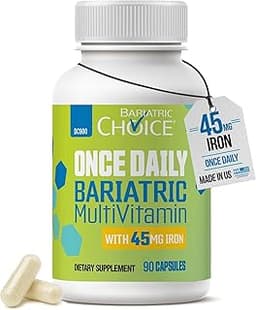
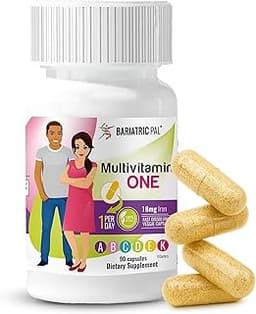
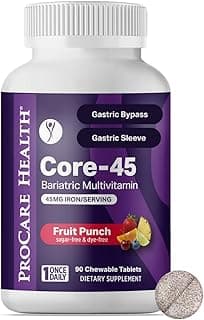
All prices based on 3-month (90-day) Amazon supply. Updated April 2026.
How should you shop if you had gastric sleeve?
If you had gastric sleeve, choose a formula that matches your actual risk profile, not just the fact that sleeve is less malabsorptive than bypass.
This is where people oversimplify. Yes, sleeve patients usually have lower deficiency risk than bypass patients. No, that does not mean every sleeve patient should buy the lightest formula on the market.
If you are low risk, do not menstruate, have no anemia history, and your labs stay solid, a lower iron formula can make sense. But if your ferritin trends down, your B12 slips, or your clinic wants stronger support, you should shop like someone with a more aggressive need.
The bottom line
Gastric bypass usually requires more aggressive vitamin support than gastric sleeve, but lab results and personal risk factors matter more than slogans on a bottle.
If you remember one thing, remember this. Roux-en-Y gastric bypass and gastric sleeve are not the same nutritionally. Bypass changes absorption more. Sleeve usually causes fewer deficiencies, but it still requires lifelong supplementation and follow up.
Ready to find your bariatric multivitamin?
We compared all 15 bariatric multivitamins, manufacturer-labeled for gastric bypass, sleeve, and mini-bypass patients, ranked by price per day. Updated monthly.
Compare All 15 Bariatric Multivitamins →Frequently Asked Questions
Do gastric bypass patients need more iron than gastric sleeve patients?
Often yes, but the official ASMBS guideline is based on risk level, not just surgery name. Low risk patients may need at least 18 mg, while menstruating females and patients after Roux-en-Y or sleeve may need 45 to 60 mg daily.
Is vitamin B12 required after both gastric bypass and gastric sleeve?
Yes, both surgeries require ongoing B12 supplementation. ASMBS recommends 350 to 500 mcg daily orally, or 1000 mcg monthly by injection.
Can gastric sleeve patients take the same vitamin as bypass patients?
Sometimes yes, but sleeve patients do not always need a bypass strength formula. The right answer depends on labs, iron status, tolerance, and your clinic's advice.
Why is Roux-en-Y gastric bypass riskier for deficiencies?
Roux-en-Y changes both stomach size and intestinal absorption. That makes deficiencies more likely than with gastric sleeve, which mainly reduces stomach size.
Should I buy vitamins based on my surgery or my lab results?
Both matter, but lab results should decide the final choice. Surgery type sets your baseline risk, while labs show what your body is actually doing.
Related Articles
Best Multivitamin After Gastric Bypass
Top-ranked bypass vitamins with full iron and B12 coverage.
Read →Best Multivitamin After Gastric Sleeve
Top-ranked sleeve vitamins with 18mg iron and B12 coverage.
Read →Bariatric Vitamin Deficiencies
The deficiencies bariatric patients watch for.
Read →Looking for surgery-specific guides?
This site covers every WLS patient. If you want content tuned to one surgery type, the Dutch Goose network has two dedicated sites.